Alder & StonePest Control
Request help

Suspected wasp nest

Wasp nest treatment in Edinburgh

Wasps repeatedly entering one opening near a door, roof edge, shed or path? Stay clear of the flight route and request help with identification, access and treatment.

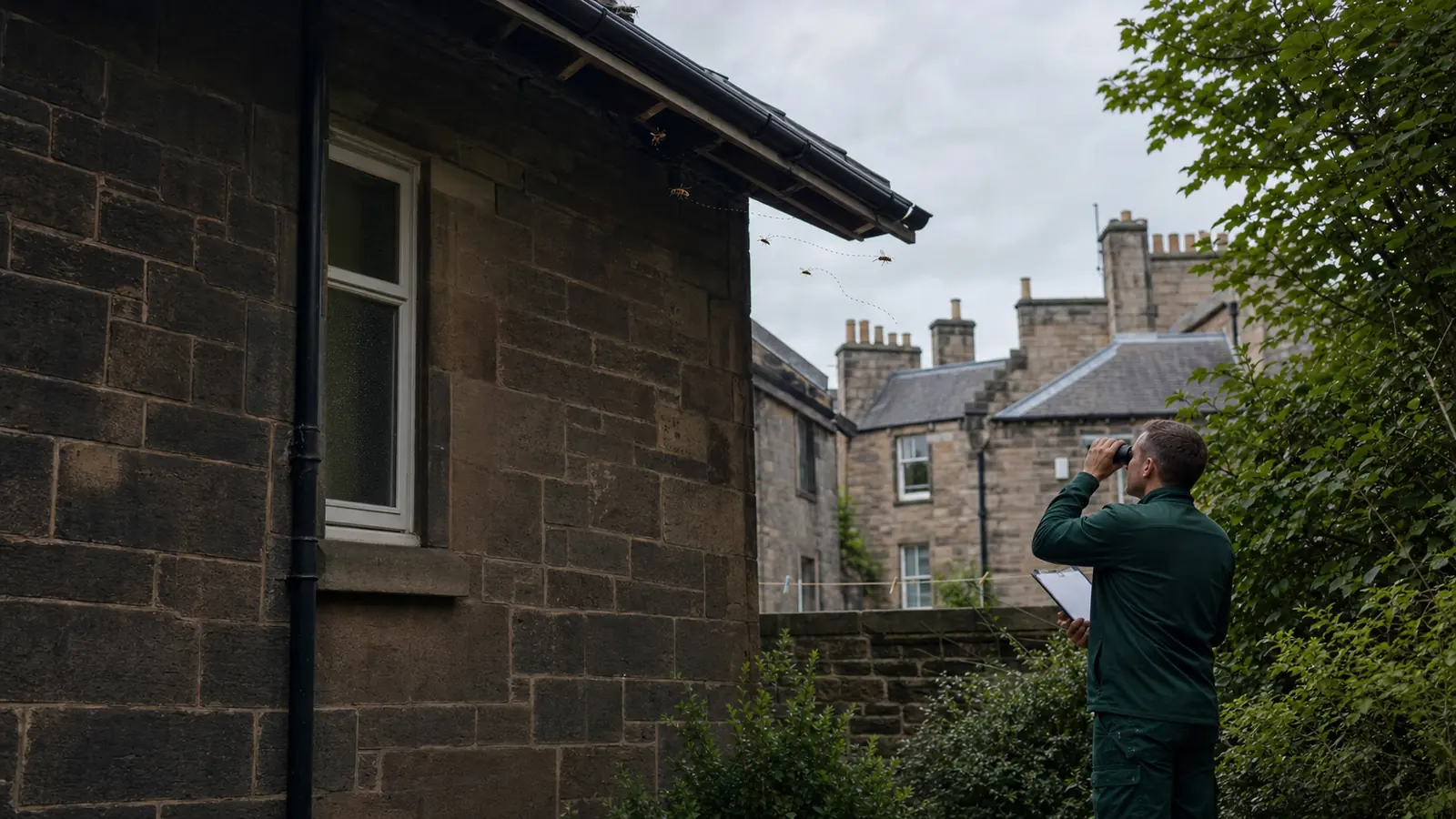
Wasps following a flight path near exterior roof eaves
Exterior activity

Get help safely

A repeated flight path can point to an active nest

Wasps moving in and out of the same opening can make a garden, doorway, loft edge or business entrance difficult to use safely. A treatment visit can assess the insect, likely nest position and risk to people nearby. You do not need to approach the entrance or obtain a close photograph before requesting help.

  • Help for nests around homes, outbuildings and workplaces.
  • Ground-level and elevated access considered separately.
  • Medical emergencies stay with the appropriate emergency service.

Identification

Wasps, bees and other flying insects may need different help

Colour alone can be difficult to judge, especially around a high roof edge. Flight behaviour, the setting and the form of any visible nest can help distinguish the likely insect. Bee activity may be better suited to a specialist conservation route, while an uncertain species should not be treated on a guess.

  • Normal activity around flowers may not be a nest problem.
  • An exposed cluster should be left undisturbed.
  • Identification is confirmed as far as the available view allows.
Wasps following a flight path near exterior roof eaves
Exterior activity
Edinburgh tenement entrances and ground-floor business frontages
Edinburgh properties

Nest position

The safest access route shapes the job

A nest beside a ground-level vent is different from activity under eaves, inside a wall cavity or beyond a loft space. Height, ladders, roof access, locked areas and nearby public routes can affect the service. Treatment should not require a customer to climb, enter a confined space or stand beneath the flight path.

  • Doors, windows and paths beside the entrance considered.
  • Shared or commercial access planned around occupancy.
  • Difficult locations assessed before a method is agreed.

Treatment

The method should suit the species, location and risk

Treatment options depend on whether the nest is active, where it sits and who uses the affected area. The proposed method should come with clear instructions about keeping away, re-entry and what activity may still be seen afterwards. No treatment should be presented as universally harmless or guaranteed.

  • The target area and access method agreed in advance.
  • Children, pets, customers and known sting allergies considered.
  • Aftercare matched to the treatment used.
Technician inspecting shelving in a clean commercial storeroom
Business premises
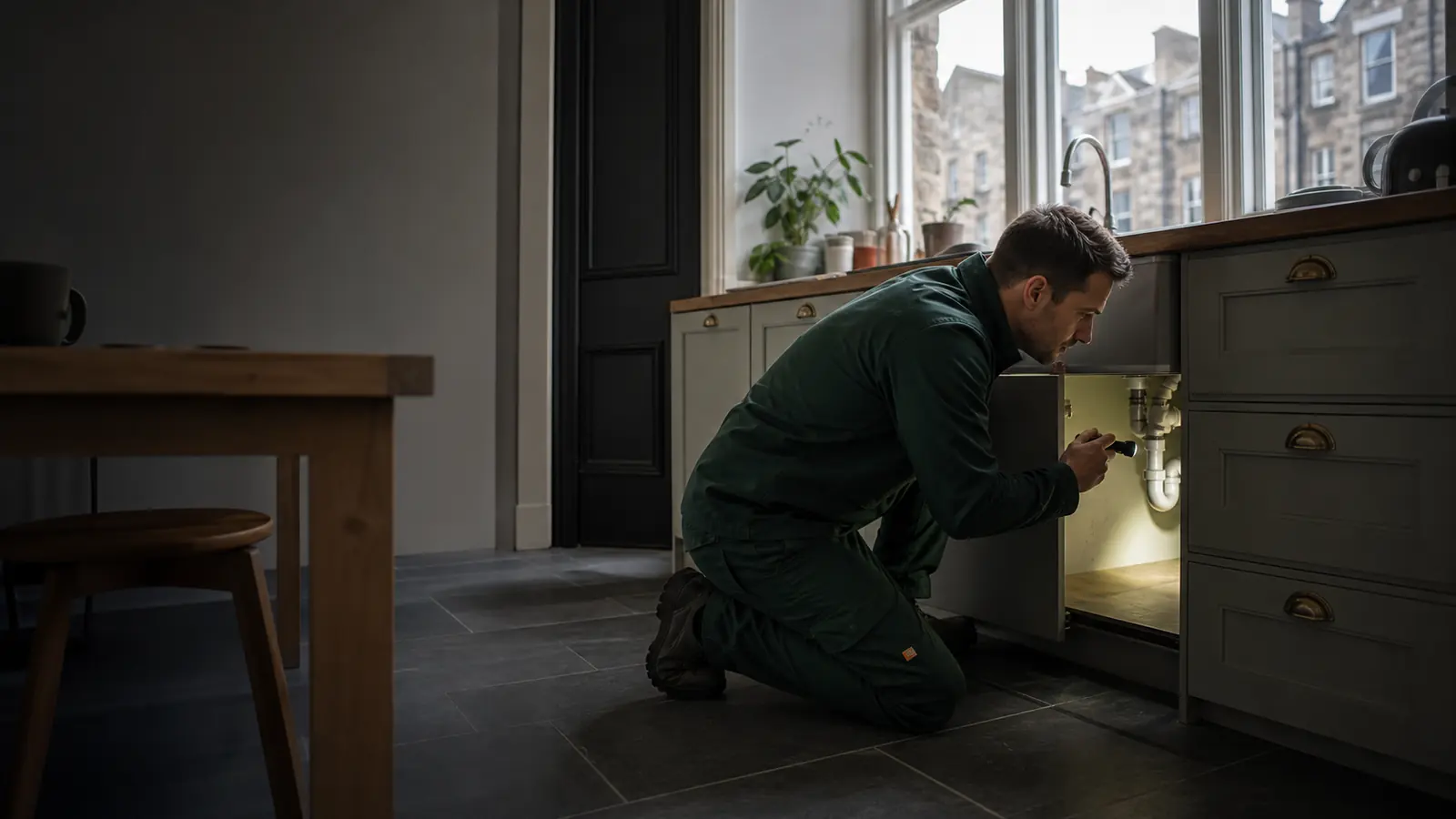
Pest-control technician inspecting the perimeter of an Edinburgh kitchen
Home inspection

Before and after

Leave the entrance open and keep people away

Do not block the opening, strike the structure or spray into an uncertain nest. Keep children, pets and anyone with a known sting allergy away from the flight route. After a visit, follow the treatment instructions and get back in touch if activity moves to a new point or remains outside the expected pattern.

  • No ladder or loft investigation is needed from you.
  • Keep food and customer areas clear where relevant.
  • Use emergency medical help for a severe sting reaction.

Price and timing

Cost depends on access and where the nest sits

A straightforward accessible nest and a high or concealed location can require different time, equipment and controls. Identification, access, occupied areas and any follow-up can all affect the quotation. Request help with the approximate position and postcode to discuss the likely next step.

  • Access needs clarified before attendance.
  • Any follow-up expectation explained with the quote.
  • Availability confirmed for the property rather than assumed.
Wasps following a flight path near exterior roof eaves
Exterior activity

Practical answers

Questions before you request help

Should I block a suspected nest entrance?

No. Blocking or disturbing an active entrance can bring you closer to the insects and may move activity elsewhere.

How can I tell whether they are wasps or bees?

Behaviour, setting, body shape and any visible nest may help, but keep your distance and use the wasp-or-bee guide when you are unsure.

Can I take a photograph?

Only from a safe position outside the flight path. A close or elevated photograph is not required.

Does every nest need treatment?

Not always. Species, location and risk to people matter, so the right option depends on the situation.

What if someone has a sting allergy?

Keep them away from the area. Use appropriate medical or emergency help for any reaction.

What affects the price?

Nest position, access, identification, occupied-area controls and follow-up can all affect the quotation.

Will activity stop immediately?

Timing depends on the method and nest. Follow the aftercare instructions and ask when continuing activity should be reported.

Can I use a ladder to find the entrance?

No. Stay at ground level and away from the flight path; access can be assessed as part of the service.

Next step

Ready to ask for help?

Request help

Tell us what has been happening

Choose the closest problem and share where it is affecting the property in seven short steps.

Step 1 of 1