Alder & StonePest Control
Request help

Home and pet areas

Flea control for Edinburgh homes

Noticed small insects or bites around rugs, furniture or pet-resting areas? Get help with the home while a vet looks after any animal-health needs.

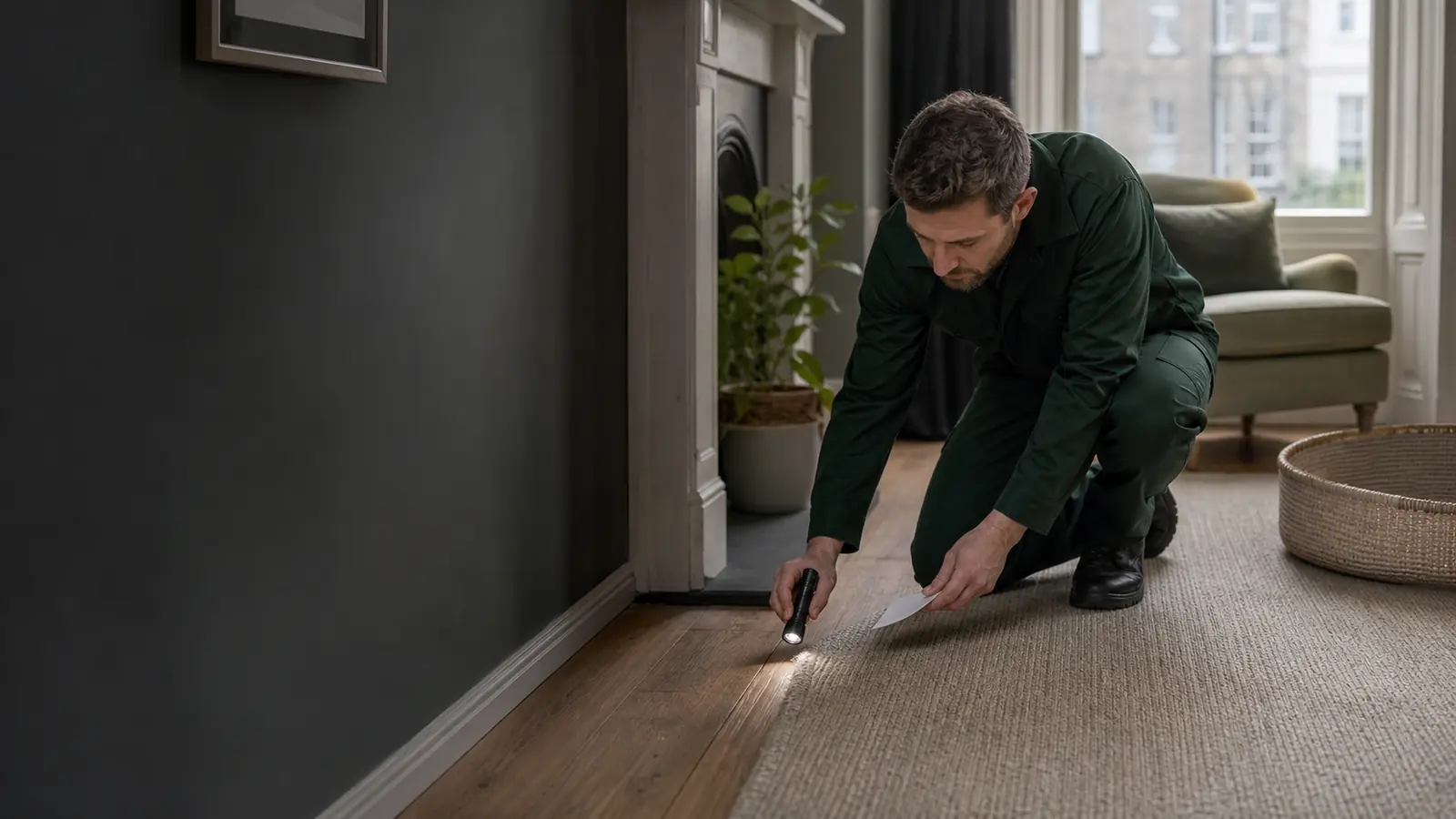
Technician checking the edge of a rug and upholstered chair
Living-area check

Get help

Treat the home and pet-health needs as connected but separate

Flea activity can affect rooms, soft furnishings and the places where pets rest. Household pest control deals with the property, while a vet is the right source for animal treatment and health concerns. Coordinating both sides can avoid unsafe product use and leave fewer parts of the problem untreated.

  • Property help for carpets, rugs, furniture and floor edges.
  • Veterinary advice for pets and animal products.
  • A service plan shaped by the rooms that are actually affected.

Assessment

Bites alone are not enough to identify fleas

Skin irritation can have more than one cause. The property assessment can look at insects, affected rooms, pet-resting areas and the timing of activity before treatment is selected. This helps avoid applying a household pesticide to the wrong pest or using it where it is not suitable.

  • Human symptoms directed to an appropriate healthcare service.
  • Pet symptoms and veterinary products discussed with a vet.
  • Property signs used to shape the household treatment.
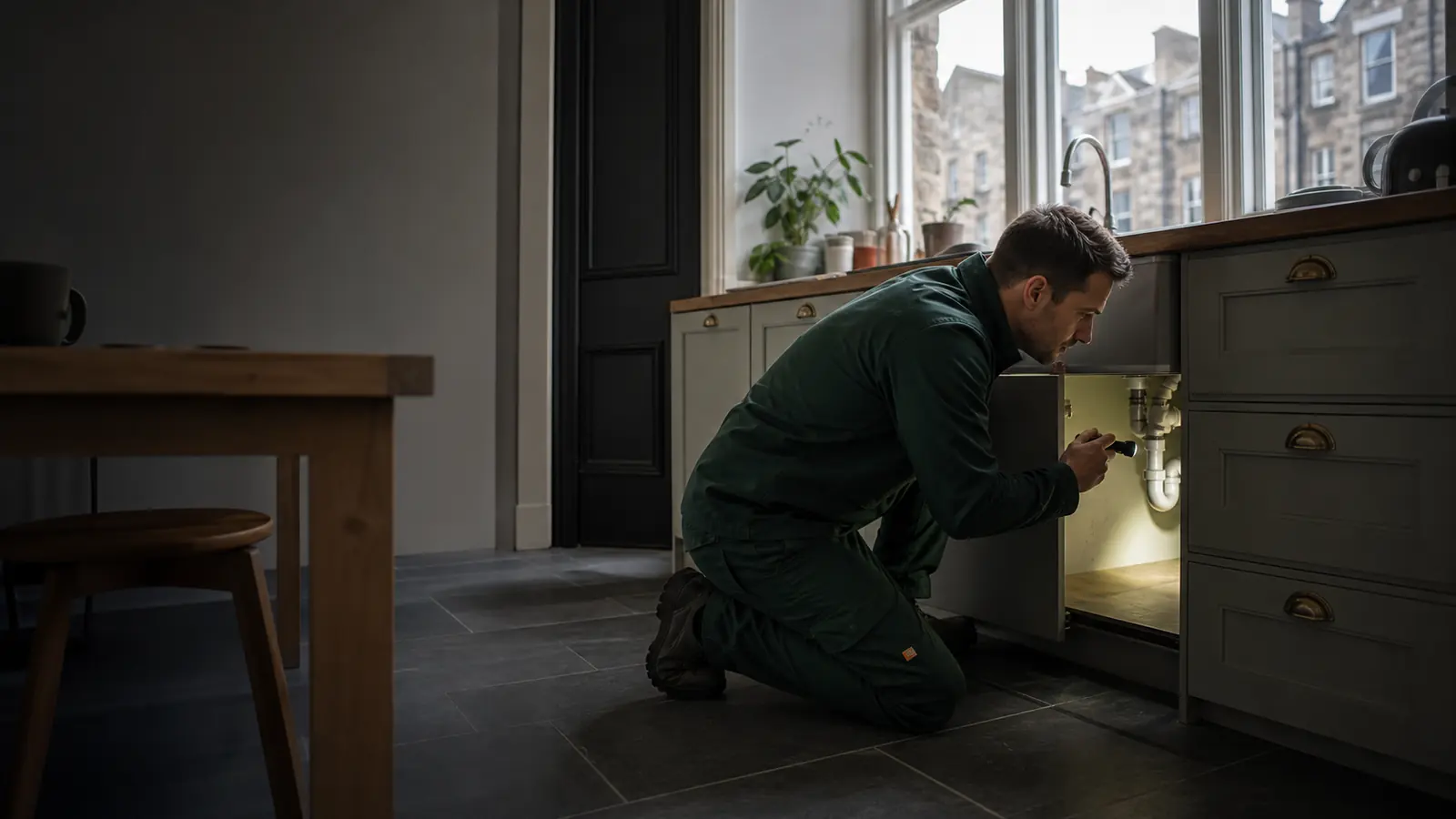
Pest-control technician inspecting the perimeter of an Edinburgh kitchen
Home inspection
Technician checking the edge of a rug and upholstered chair
Living-area check

Treatment

Rooms and soft furnishings shape the method

Carpets, rugs, upholstered furniture, bedding and floor edges may all need to be considered. The chosen method and room coverage should match the confirmed problem, children or pets in the home and any product already used. Re-entry and cleaning instructions should be clear before treatment starts.

  • Affected rooms agreed rather than assumed.
  • Household and veterinary products kept separate.
  • Laundry and vacuuming timed to the method.

Flats and rented homes

Shared laundry and furnished rooms can change the scope

A furnished let, tenement or home with several pet areas may need more coordination than one sparsely furnished room. Access, furniture ownership and shared laundry or storage can affect what is practical. The landlord route can help when an owner or agent needs to arrange entry and approve work.

  • Help for owner-occupied and rented homes.
  • Furniture and pet areas considered room by room.
  • Landlord coordination available where needed.
Edinburgh tenement entrances and ground-floor business frontages
Edinburgh properties
Technician inspecting shelving in a clean commercial storeroom
Business premises

Before a visit

Keep affected items in place until the plan is clear

Avoid moving rugs, bedding or upholstered items into an unaffected room. Keep labels for household and veterinary products, and follow your vet's advice for pets. Extensive vacuuming, laundry or room clearance is best timed to the treatment rather than started from a generic checklist.

  • Do not apply household pesticide to an animal.
  • Do not combine products without suitable advice.
  • Keep children and pets away from any recently treated area.

Price and follow-up

Affected rooms and follow-up needs drive the quote

The number of rooms, furniture, access, treatment method and any follow-up can change the cost. Ask which spaces are covered, what cleaning is expected and when later activity should be reported. This makes it easier to compare the full service rather than only an initial visit price.

  • Room coverage stated before work begins.
  • Cleaning and re-entry steps matched to the method.
  • Follow-up expectations discussed with the quotation.
Technician checking the edge of a rug and upholstered chair
Living-area check

Practical answers

Questions before you request help

Do bites mean there are fleas?

Not necessarily. Skin marks have several possible causes, so property signs and appropriate healthcare or veterinary advice matter.

Should my pet be treated too?

Ask a vet about the animal and suitable veterinary products. Household pest control deals with the property rather than treating the pet.

Can I use a home spray on my pet?

No. Never apply a household pesticide to an animal. Use a veterinary product only as directed by a vet and its label.

Should I move rugs and bedding?

Keep potentially affected items out of unaffected rooms until the treatment and cleaning steps are clear.

How many rooms need treatment?

That depends on where activity is found, how the rooms are used and where pets rest.

Will one visit be enough?

The expected follow-up depends on the extent, method, room care and later activity.

What affects the cost?

Affected rooms, furniture, access, treatment, cleaning needs and follow-up can all affect the quote.

What if I have no pets?

Flea-like activity can still need identification. An assessment can consider previous occupants, visitors, furniture and the affected rooms.
Next step

Ready to ask for help?

Request help

Tell us what has been happening

Choose the closest problem and share where it is affecting the property in seven short steps.

Step 1 of 1