Alder & StonePest Control
Request help

Businesses and managed premises

Commercial pest control in Edinburgh

Protect day-to-day operations with a service shaped around the affected area, opening hours, stock, food, staff and customer access.

Technician inspecting shelving in a clean commercial storeroom
Business premises

Business support

Act on pest activity without losing sight of the premises

A pest problem in a kitchen, stockroom, plant area, office or customer space can disrupt how the business operates. Commercial pest control can inspect the affected area, identify likely routes and agree treatment or monitoring around opening hours, access and the people using the site.

  • Hospitality, retail, offices and managed buildings.
  • One-off concerns and ongoing service needs.
  • Access arranged around staff, customers and deliveries.

Inspection and action

The service should focus on the places activity affects

A loading bay, cellar, kitchen, waste area and office ceiling each raise different questions. Inspection can look at current activity, likely entry routes and conditions that may need attention. The resulting scope may combine treatment, monitoring, proofing advice and building work by the appropriate trade.

  • Affected zones agreed clearly.
  • Pest-control work separated from repairs or facilities work.
  • Escalation routes set for new activity.
Pest-control technician inspecting the perimeter of an Edinburgh kitchen
Home inspection
Technician inspecting shelving in a clean commercial storeroom
Business premises

Food and hospitality

Fit pest control into the food-safety system already in use

Food businesses need to manage affected stock, preparation areas, deliveries and waste through their own food-safety procedures as well as arranging pest control. The service can support inspection, treatment and monitoring, while official requirements and any authority decisions remain separate from a contractor's marketing claims.

  • Kitchens, dry stores, cellars and waste areas considered.
  • Visit findings can support the business's own actions.
  • No claim that a pest-control visit certifies compliance.

Shared and managed sites

Coordinate landlords, facilities teams and neighbouring units

Retail parades, mixed-use tenements and managed offices can share basements, service ducts, loading areas and bin stores. A practical service may need one person to arrange common access while each occupier manages its own space. A nearby business or shared wall does not by itself establish where activity began.

  • Private and communal areas scoped separately.
  • Authorised access contacts agreed before attendance.
  • Sensitive business information kept off public pages.
Edinburgh tenement entrances and ground-floor business frontages
Edinburgh properties
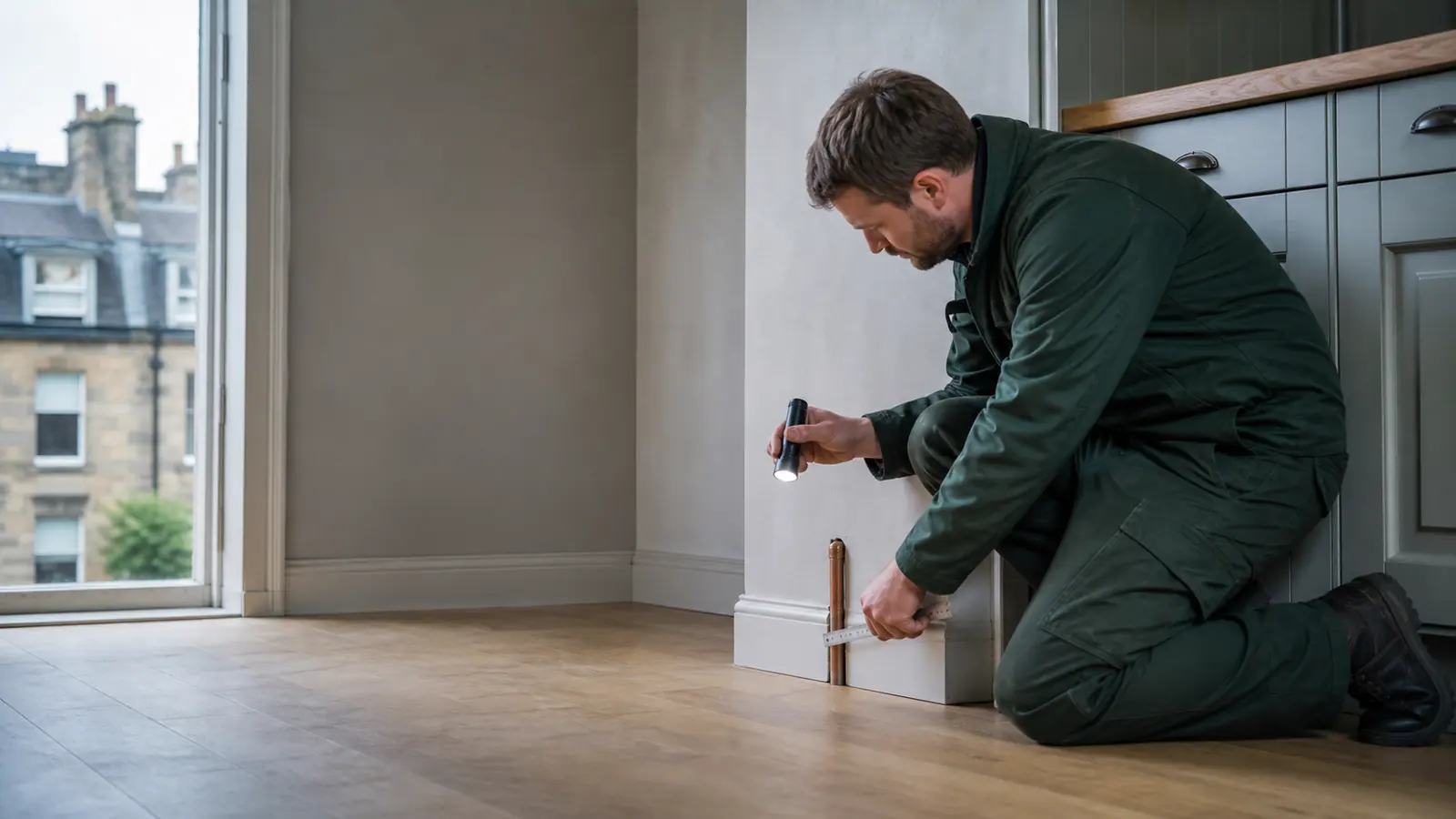
Technician checking a pipe opening beside a kitchen unit
Entry-point check

One-off or ongoing

Choose the level of service the site actually needs

A single incident may call for a focused visit, while repeated activity or a higher-risk setting may benefit from monitoring and planned return visits. Compare what each option covers, how findings are communicated and when proofing or repair recommendations become separate work. A recurring contract should answer a real operational need.

  • Visit frequency linked to the site and problem.
  • Monitoring devices and reports explained in the scope.
  • Responsible contacts and escalation steps agreed.

Quotation

Premises, access and service level shape commercial pricing

Site size, operating hours, affected zones, pest activity, treatment, monitoring, proofing and reporting can all affect price. Ask for setup, recurring and additional-work costs to be separated where relevant. Request help with the postcode, type of premises and affected area to discuss the right starting point.

  • One-off and recurring costs compared clearly.
  • Out-of-scope repairs or proofing identified.
  • Service availability confirmed for the premises.
Technician inspecting shelving in a clean commercial storeroom
Business premises

Practical answers

Questions before you request help

What should a food business do first?

Follow the business's food-safety procedures, protect affected stock and arrange suitable pest-control help for the premises.

Can pest control confirm that a business is compliant?

No. A service can support pest management, but it does not replace official requirements, regulators or the business's own management system.

Do we need an ongoing contract?

Not always. The right service depends on the premises, pest activity, business needs and whether monitoring adds value.

Can visits happen outside opening hours?

Availability is not assumed. Share the access window when requesting help so suitable timing can be discussed.

Can one service cover a shared building?

It may be possible to coordinate shared areas, but each occupier's space, permission and responsibilities should stay clear.

Can work be arranged discreetly?

Explain customer, staff and access needs privately when requesting help so practical options can be discussed.

What service information should we keep?

Keep visit findings, monitoring results, treatment instructions and any proofing or repair recommendations needed by the business.

What affects commercial pricing?

Premises size, opening hours, access, affected areas, treatment, monitoring, reporting and proofing can all affect the quote.

Next step

Ready to ask for help?

Request help

Tell us what has been happening

Choose the closest problem and share where it is affecting the property in seven short steps.

Step 1 of 1